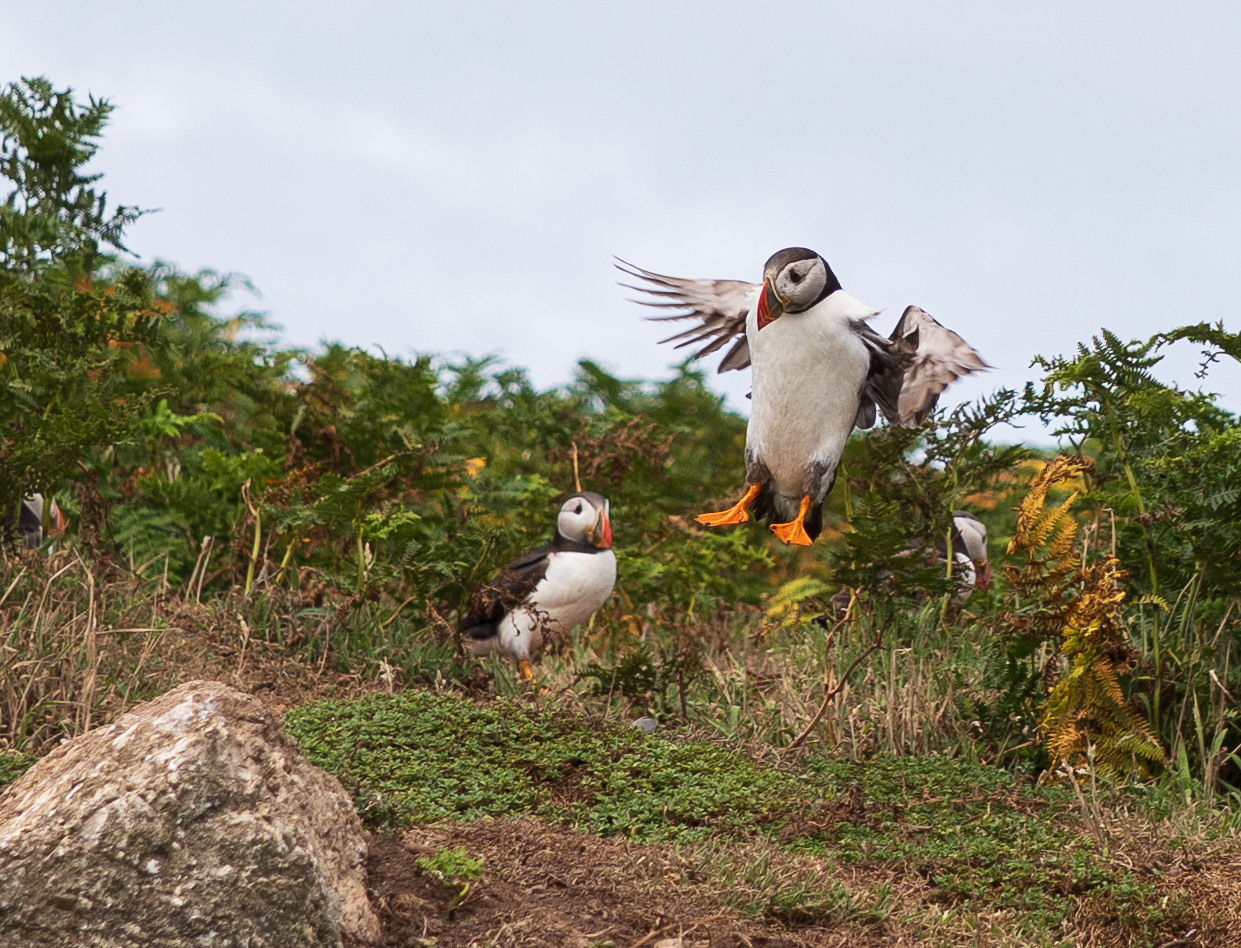
Skomer Island – became a National Nature Reserve on June 15, 1959
Puffins have been on my must-see list for a while. Is it their bright colored beaks, orange feet, small stature, or their goofy walk while on shore – who is to say? Also why not start to embrace middle age and delve into birding?
Puffins spend the majority of their time out at sea so the best time to watch them is during breeding season, when they return to land. This runs from April through the beginning of August. Atlantic puffins spread across the North Atlantic islands and coasts from Canada to Norway to make their burrows for breeding. They have been seen as far south as Spain.
Living in the United Kingdom gives us a prime opportunity to go watch the puffins so I began researching the best locations to see them. Skomer Island came up as an easy drive away and a large puffin colony. Pembrokeshire Islands Boat Trips is the only ferry service that is allowed to land on Skomer Island. The ferry is a fifteen minute trip and gives you five hours on the island to explore. Tickets during prime puffin viewing are £44 for adults and well worth it.
Skomer Island became a National Nature Reserve on June 15, 1959. It is managed by the West Wales Naturalists’ Trust with a resident warden living on the island from early March until the end of October. Skomer Island is roughly 730 acres with a 4 mile circular trail that takes about 3 hours to navigate. Throughout the island are a series of footpaths that allow you to explore the island without disturbing any of the birds. It is recommended to travel one way by keeping the sea to your right at all times since the paths are quite narrow with minimal passing room at certain points.

As the ferry started towards the island it felt like going back in time and arriving to another world. There were so many puffins soaring overhead and bobbing in the water. We were even warned that some of the puffins have already left and returned to sea so I was nervous that we wouldn’t see that many. Shortly the ferry pulls in and white dots of puffin chests are all the eye can see dotting the cliffside and my fears were abated.
After disembarking from the ferry you climb 87 stairs before a safety briefing regarding the island and the local inhabitants. The island has over 300,000 pairs of nesting Manx Shearwaters, the largest breeding population in the world. Sadly we did not see any as they tend to hide in their burrows in the day, or fish out in the sea. The island hosts 25,000 breeding puffins and is the largest colony in Southern Britain. Other birds that can be seen include Guillemots, Razorbills, and other seabirds which tend to grow on the island due to a lack of predators like rats on the island.
There is a five room hostel on the island in a converted old farm building with a shared kitchen and bathroom. During puffin season overnight stays are two or three nights and begin on Tuesdays, Thursdays, and Saturdays due to the ferry service. It booked out way far in advance but is on our list for next year. For more information: welshwildlife.org
There are restrooms located at the farmhouse with water sold at the beginning briefing area and farmhouse. There is no trash service on the island so practice leave no trace.

While hiking around the island we spotted a kayak tour navigating their way around the island, which would be a lot of fun. You can see them below to the right of the island.


Overall the hike around the island was beautiful with very few choosing the outer trail. We easily had time to complete the full circuit including multiple photo opportunities and watching all the different birds. Our progress was delayed at each puffin colony as we did our puffin paparazzi act.

Prior to visiting I researched basic puffin facts and was deeply impressed by these small animals. The colorful beak is only seen during the summer months during breeding as it sheds during the winter while they float at sea. Baby puffins are called pufflings and do not have the bright colored beaks until they reach maturity at three to six years old. They live around 30 years and typically mate for life. They do not stay together at sea though, they meet back at the same breeding colony every year. Once they meet up they create a burrow together where they line it with feathers and grass. The egg with then incubate for roughly 42 days prior to hatching into a puffling. Both mothers and fathers take turns feeding the pufflings.

Puffins are about ten to eleven inches tall with eighteen to twenty four inch wingspan. They can fly up to 55 mph and can dive up to 60 meters (196 feet) down to catch their food. They eat sandeels, sprat, and herring along with other fish. We did see a few puffins carrying back fish to their burrows but were unable to capture it due to the speed of flight of these birds.

They were amazing to watch flying around. They use their feet as brakes and to try to maintain their balance while landing. We did witness a few mislandings and tumbles. Also watching them land in the water ended in some less graceful splashes that did not look intentional.

While waiting for the ferry to load we spotted an infiltrator that was trying to blend into their surroundings.

Overall I would highly recommend this island and outing to anyone. We even spotted a seal and dolphin on the return back to the mainland. The puffins have no fear of humans and walk right in front of you across the trail a few feet away especially if you remain still so as not to spook them. If anyone did get too close they immediately took off and are gone due to their quick speed. We will be booking another outing next year, hopefully an overnight stay on the island in the hostel or a volunteer position which they have available from April to August.