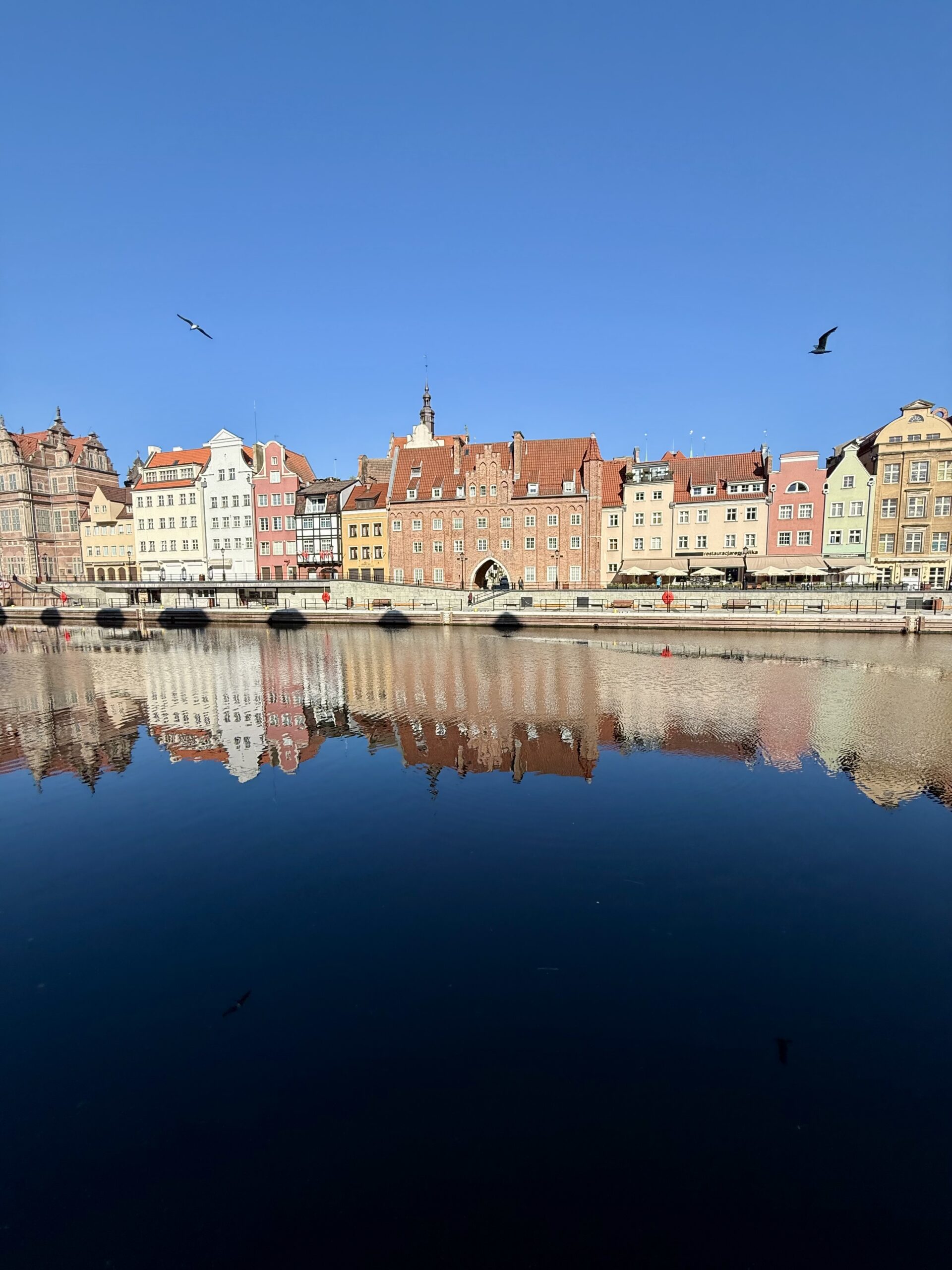
Gdansk – Amber capital of the Baltic Sea
Poland is not typically on the forefront of tourists’ minds when they are thinking of visiting Europe. It was not at the top of my must see countries prior to this trip. After spending a long weekend in Gdansk, my mind was changed for the better. I would recommend visiting due to lower tourist crowds even during peak summer season, great food options, stunning architecture, history, and countless museums.

The city of Gdansk dates back to the 10th century when it was established as an important trading town. Gdansk continued growing in wealth from trading and shipbuilding. As the wealth grew control over the city became widely contested through the centuries. After World War I the Treaty of Versailles was signed which required Germany to give up territories to the Polish State. This included Gdansk or the area known as the Free City of Danzig which was further protected by the League of Nations. This free city survived until it was invaded by Hitler in 1939, marking it as the location of the start of World War II. After the liberation of Gdansk by the Soviet Army in 1945 it was controlled by the Polish Committee of National Liberation. This communist rule was eventually contested by the Solidarity trade union movement which ultimately led to the end of communist rule in Poland in 1989.
I was unaware that Gdansk was the site of the beginning of World War II. There is a monument that you can go walk around marking the site of the invasion. Unfortunately I did not realize this fact until we were visiting so we were unable to walk around the monument, which does give us a reason to return.

You can reach the monument by car, ferry, or pirate ship. We did make the impractical choice of pirate ship. The pirate ship acts like a hop on/off bus allowing passengers off at the monument, but we were on the last one of the day so we were unable to hop off. We did see the monument in the distance as we sailed past. The pirate ship offers drinks and food if you are peckish during your 90 minute cruise.


Another fact I learned while visiting was about the namesake of Fahrenheit temperature. Daniel Fahrenheit was born in Gdansk in 1686, and he invented the first mercury glass thermometer. Attached to his instrument was the Fahrenheit scale which was then adopted as a temperature measurement. In the square near the famous Neptune fountain is a replica of one of his earlier prototypes.


One of my favorite architectural details was all the different ornate gutters that can be seen on the majority of the buildings to help direct water to the streets. In Polish they are referred to as “Rzygacze” or the English translation of pukers. So now they will forever be in my mind as ornate pukers which is the perfect name for the intricate carved gargoyles you see all over Europe. I would love to be sitting at a cafe during a rainstorm and watch the water flow out of all the different pukers into the street.

Behind the ornate pukers head is St. Mary’s Church. St. Mary’s Church is the largest Gothic brick church in the world. It was started with a cornerstone in 1343 and completed in 1502 with the ability to have 25,000 people inside. Inside the church is a wooden astronomical clock built during the period 1464-1470 that moves at noon (actually 11:57am). We were unable to watch it due the time we visited the church, but it is on our list to come back and watch.

One task I always sign us up for while touring new cities is any tower climb or ability to see out over the city. The tower climb is 405 steps with the first 100+ in a tight spiral. Luckily it is a one way climb up and down so you do not run into traffic.

Once you make it to the top the surrounding views of Gdansk are breath taking (or maybe it was all the steps going to the top). The platform on the top is quite small and gets very busy quickly. We arrived at the platform at 10:30 am when the church opened at 10:00am and it was already getting crowded having some wait time between sides of the platforms to look out at the different parts of the city. I recommend arriving when the church first opens and climb up prior to looking around the inside of the church.


As we continued exploring Gdansk it became apparent how important amber is. Every tourist shop showcases amber pieces and many streets were lined with vendors selling different amber jewelry options. The showstopper that made me want to explore why amber is so important is the Amber Altar at St. Bridget’s Church.

The Amber Altar began in 2000, and was designed by professor Stanislaw Radwanski. To date it is only sixty percent complete with 840 kilograms of amber currently displayed. The Altar is created from donations of amber, silver, and gold with every small grain utilized to create the work of art. When the project is complete it will cover 120 square meters with amber and have more amber than the Amber Chamber had. The Amber Chamber was located in the Catherine Palace near St. Petersburg Russia with amber panels, gold leaf and mirrors. It is often referred to as the Eighth Wonder of the World and sadly was dismantled during WWII.
After visiting the Amber Altar we decided a stop in the Amber Museum was a must. The museum helped provide context on how important amber was to the city of Gdansk, and all the different ways it can be utilized. Poland has a large amount of amber deposits from the glaciers in the area millions of years ago. Gdansk became a source of wealth due to amber trade and royalty wanting amber. In 1477 the amber craftsman guild was set up by the City Council which then defined the rules to operate, membership, training, and workshops. In order to join the guild multiple conditions had to met including being a Gdansk citizen, proof of being from a married couple, baptism certificate, and if married the wife must also comply with all the aforementioned rules. As amber helped create massive wealth more rules and limitations were placed on how many guilds were allowed and guild members.
Gdansk produced the majority of amber goods created between the 16th and 18th century with a majority of the orders from royals, dukes, and nobility throughout Europe. The variety of amber goods included cutlery, bottles, jewelry, board games, candlesticks, mirrors, cabinetry, and so much more. The museum had a floor dedicated to all the different amber artifacts. The intricate detail on these chess pieces is amazing, especially the horse who looks ready to attack any opponent.

After seeing many amber displays showcasing different insects preserved it made me realize Jurassic Park is not as far fetched as I once had believed. Look at the insects that you would be able to collect DNA from, and maybe even dinosaur DNA if you were lucky.

Despite our unstated rule of only one museum per day we followed up the Amber Museum with the European Solidarity Centre. I recommend the short audio tour which is included in the ticket to the museum, and takes an hour and a half to two hours depending how long you take exploring the different exhibits. Overall it is a must visit as it gives a great history of the Solidarity movement. Right outside the center you can visit gate number two of the shipyard where the strike in 1980 was started against the then communist government.


The following day we toured another museum, the Museum of the Second World War, and once again chose the audio guide even though it was an additional cost. This museum is massive and time consuming, we realized when we were at audio guide stop 5 out of 17 that it had been already an hour and half. I recommend pacing yourself and do only this museum for the day. The museum showcases a street prior to the war and then you continue through exhibits ending up in the same street postwar. This helped showcase the destruction that was experienced in the area.

OK, enough of museums, now onto one of my favorite subjects – food! Some important words to learn while touring the city include paczki (donut), lody (ice cream), piekarnia (bakery), and pieorgi. If you see any of these words I recommend having a look or quick treat.
Polish donuts (paczki) are soft filled donuts that can either be glazed or rolled in sugar. While I am not normally a filled donut fan I can say these changed my mind. We chose nutella and blueberry and both were absolutely delicious and warm from the oven.

Another sweet treat I highly recommend you try is lody (Polish ice cream). It is similar to American soft serve ice cream that you can get in a cone. You can choose one flavor or get a swirl. We ended up trying multiple different shops, the cream is lighter than vanilla but delicious. The swirl includes chocolate and may be my favorite lody. Pictured below is a small with half already devoured.

If you are looking for a fast lunch I would highly recommend Georgian bakers for lunch or a snack option. Previously we have been to Georgian restaurants and have loved every dish we have tried. Our favorite is Khachapuri or a bread boat filled with three traditional cheeses.
Piekarnia Gruzinska Ketili Puri is right near the Amber Museum and will heat up any pastries that you choose from their glass cases. We went with a traditional samsa (meat filled) and osuri (filled with potatoes and cheese). Both were delicious!

Lastly, can you go to Poland and not have pierogis? I made a reservation online at Pieorgarnia Stari Mlyn and was overwhelmed with the huge menu. We both chose to try oven baked pieorgi and traditional boiled pierogis with our favorite being the traditional pierogis. They allow you to choose all different flavors which was my favorite so you got to truly try all varieties. The overall winner for us was the traditional pieorgi filed with potato.

Also it is strawberry season so why not try strawberry cream filled pierogis? Answer they were delicious and my favorite part of the entire meal.

Overall I highly encourage a visit to Gdansk whether it be for the food, history, or architecture it is a great city to visit. For more details about our trip see my guide I created in Wanderlog.